
Friday, November 23, 2018

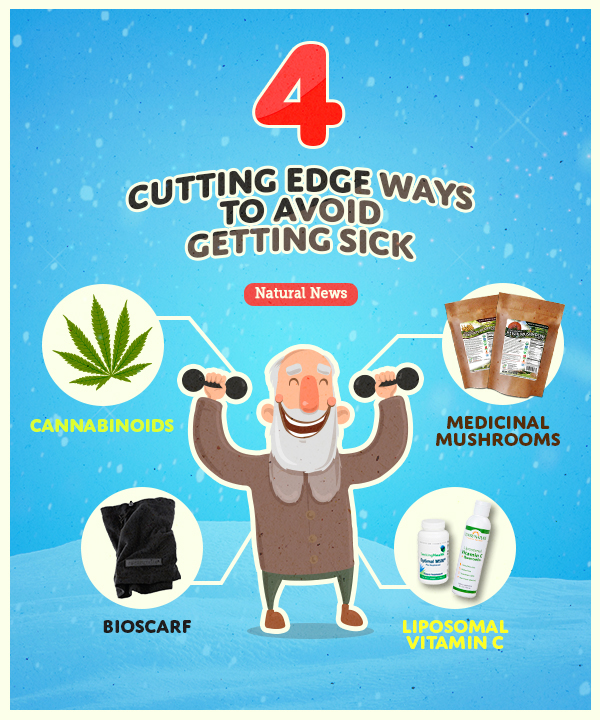
4 cutting edge (and fun) ways to avoid getting sick this winter

Image: 4 cutting edge (and fun) ways to avoid getting sick this winter


Sickness is a common state on planet Earth these days, but nothing cranks up the dial a little bit more than the cold and flu season. Being trapped indoors with little to no sunshine along with poor food choices during the tumultuous trifecta of Halloween, Thanksgiving, and Christmas, is typically enough to take most people down with an inconvenient cold, flu, sore throat, or the like.
Although most of these conditions are not usually life threatening, they are annoying as they compromise our quality of life and can leave us unable to do our day-to-day-activities as effectively. This is why many people stock up on their natural remedies prior to this season, to take as preventatives or have on hand in case sickness strikes. In some cases, people don’t care how a remedy tastes, as long as it works. The Antibiotic Tonic definitely fits into that category.
However, if you’re someone who would rather avoid sickness in the first place, and do it in a way that doesn’t radically shift your habits or insult your taste buds, then dig in with these four cutting edge ways to avoid getting sick.

Cannabinoids

While most of the world keeps referring to cannabis as a dangerous drug (marijuana), those on the leading edge know that cannabis is much more than a weed you smoke, and the implications of its safe and continuous use is remarkable.
In fact, the human endocannabinoid system suggests that humans are designed in a way to make very good use of the cannabis plant. The primary role of this system is to bring balance (homeostasis) to our biological systems and tissues, and when we consume cannabinoids, it can bring this healthy balance to two types of receptors – CB1 and CB2 – which exist in the brain and immune system respectively. As a result, the interaction of cannabinoids with these receptors can help support brain function and the immune system.
GLYPHOSATE testing is now being applied to all Health Ranger Store branded products. Our in-house lab uses LC-MS-MS (triple quad mass spec). See the full lab science tour video and announcement here. Shop for ultra-clean, lab-tested superfoods, personal care products and more at the Health Ranger Store, the world's most trusted source for clean foods and lab-verified nutritional solutions.
There are a few ways to get cannabinoids, like human breast milk which naturally contains this precious substance. However, if that is not a reasonable option for you, then consuming CBD oil is your next most therapeutic option. If you’re concerned about THC, the psychoactive component of the cannabis plant, you need not worry as there are several options to get all the immune supportive benefits without the high.
However, it has become a bit of the wild west with the popularity of cannabis surging, and as a result, many products don’t pass muster in terms of nutritional and medicinal benefits. Fortunately, those more interested in helping people become well and not gouging them for poor quality do exist, and the Health Ranger Store has teamed up with one such supplier to offer lab-verified CBD products that meet or exceed label claims for cannabidiol content.
You can get Native Hemp Solution products here at 15% off in Part 1 of the Health Ranger’s Black Friday Sale, which lasts until November 23rd, 12:00 pm CST.

Bioscarf

The number of contaminants in our precious air has grown exponentially over the years with biological contaminants now being mixed with man-made pollution, to create a more dangerous air supply for people on this planet. Since stopping breathing is not a reasonable solution to avoid this uptake of contaminated air, we need more practical and fashionable solutions.
Thankfully, the Bioscarf has been created to provide air filtration with the fashionable versatility of a scarf. Lab verified at one of the FDA’s testing facilities, it has been shown to filter out 99.75 percent of airborne particles that are 0.1 microns and larger. Some examples of particulate protection include pneumonia, airborne pathogens, smog, tobacco smoke, pollution, pollen, dust, and animal dander.
Stop these toxins from ever entering your body via your nose and mouth by using a fashionable Bioscarf, which happens to be perfect for the cooler weather as well.
You can get the Bioscarf at 20% off here in Part 1 of the Health Ranger’s Black Friday Sale, which lasts until November 23rd, 12:00 pm CST.
Liposomal vitamin C

Vitamin C is one of the oldest remedies in the book for supporting the immune system and fending off colds and flu, but it has had it’s warts with GMO varieties and poorly absorbed solutions that can cause stomach upset and discomfort. Fortunately, relatively new technology has found it’s way onto the scene to bypass these issues with ease.
While only 19 percent of traditional vitamin C is properly absorbed by the body, liposomalized vitamin C is absorbed much more efficiently due to the bypassing of the normal digestive process and the nutrients being delivered directly into the body’s cells for maximum uptake. This is a huge advance in maximizing your uptake of vitamin C.
Tap into this cutting edge approach to enhance your uptake of vitamin C, without the injections or irregular bowel movements. Take the painless approach to supporting your immunity, with liposomal vitamin C.
You can get Nanonutra Liposomal Vitamin C here at 36% off in Part 1 of the Health Ranger’s Black Friday Sale, which lasts until November 23rd, 12:00 pm CST.

Medicinal mushrooms

If you’ve never heard of medicinal mushrooms, you’re missing out on one of the most dynamic herbs to grace our domain. Not to be confused with the typical mushrooms you find in the grocery store, the most common medicinal mushrooms are hard and woody which limits their application for cooking. However they can be taken in capsule or powder form, and put into smoothies, teas, and even baking.
The benefits of these mushrooms seems endless, but their primary benefits include support for a healthy digestive and immune system, two areas that largely determine your susceptibility to getting sick.
The cutting edge and fun ways these medicinal mushrooms have been used is amazing, including infusing them into instant beverages that not only strongly support your immune system, but make you feel warm and fuzzy as well. An excellent example of this is Cocoa Mojo, a hot chocolate product infused with 6 different medicinal mushrooms. It’s a great way to enjoy the finer treats of the holidays, without the typical compromises, and kids will absolutely love it too (bonus)!
You can get Cocoa Mojo here at 20% off in Part 1 of the Health Ranger’s Black Friday Sale, which lasts until November 23rd, 12:00 pm CST.

See, being healthy during the winter months doesn’t have to include harsh concoctions, injections, or a trip to the doctor for antibiotics. All you need to do is stockpile cutting edge remedies and practical solutions, and you can avoid the negative hoopla of the cold and flu season. There’s never a better time of the year than during the Health Ranger’s Black Friday Super Sale with many items up to 49% off! In addition to the products above, you can also save big on probiotic-filled snacks, heirloom organics, organic skincare, organic food bars, vitamin D, nut milk makers, and more!

Why Aren’t Hospitals Treating Cancer With Black Seed Oil?


image


“Thymoquinone modulates nine of the ten hallmarks of cancer.”
There are very many research studies that show great results for black seed oil treatments related to its’ cancer killing and anti-inflammatory properties.
What is Cancer?
Well, of course, that depends on what type of cancer that we are talking about. In it’s most basic explanation, cancer is cells gone wrong. The cause of which is most often not discovered. There are benign cancers and malignant cancers. It’s the latter you have to worry about.
The Research
There have been many studies that have shown the effects of Nigella sativa on many different cancers and I will quote just a few of them here. The full list of research studies that I found is included at the end of this chapter. The list is long!
Even doctors are now urging more research into thymoquinone (TQ) the main constituent in black seed oil, for adjuvants to pharmaceutical cancer treatments – REF – ‘Thymoquinone as a Potential Adjuvant Therapy for Cancer Treatment: Evidence from Preclinical Studies.’
What the scientists are looking to discover are the exact signalling pathways that helps black cumin seed oil play such a big role in killing cancer.
Many Pathways To Healing
“The anti-cancer effects of thymoquinone are mediated through different modes of action, including anti-proliferation, apoptosis induction, cell cycle arrest, ROS generation and anti-metastasis/anti-angiogenesis. In addition, this quinone was found to exhibit anti-cancer activity through the modulation of multiple molecular targets, including p53, p73, PTEN, STAT3, PPAR-?, activation of caspases and generation of ROS.
Thymoquinone is an active ingredient isolated from Nigella sativa and has been investigated for its anti-oxidant, anti-inflammatory and anti-cancer activities in both in vitro and in vivo models since its first extraction in 1960s.
Its anti-oxidant/anti-inflammatory effect has been reported in various disease models, including encephalomyelitis, diabetes, asthma and carcinogenesis.
In addition, thymoquinone could act as a free radical and superoxide radical scavenger, as well as preserving the activity of various anti-oxidant enzymes such as catalase, glutathione peroxidase and glutathione-S-transferase.”
More Amazing Cancer Research With Black Seed Oil
“As non-invasive lesions progress to malignancy, the precursor period provides a window for cancer therapies that can interfere with neoplastic progression. Thymoquinone (Tq), a major bioactive component of essential oil from Nigella sativa’s seeds, has demonstrated antineoplastic activities in multiple cancers” REF – ‘Molecular Analysis of Precursor Lesions in Familial Pancreatic Cancer’
“A cell study conducted at the International Immuno – Biology Research Laboratory in South Carolina showed that when incubated with Nigella extract, cancer cells were unable to produce fibroblast growth factor and the protein collagenase, both are necessary for blood-vessel growth into a tumour. Without a blood supply, a tumour cannot grow”
“Thymoquinone blocked angiogenesis in vitro and in vivo, prevented tumour angiogenesis in a xenograft human prostate cancer (PC3) model in mouse, and inhibited human prostate tumour growth at low dosage with almost no chemotoxic side effects. Overall, our results indicate that thymoquinone inhibits tumour angiogenesis and tumour growth and could be used as a potential drug candidate for cancer therapy.”
“In fact, thymoquinone suppresses growth and invasion, and induces apoptosis of glial tumour cells via degrading tubulins and inhibiting 20S proteasome, telomerase, autophagy, FAK and metalloproteinases. A simple and easily available agent may be a promising adjunctive treatment option in neurological and neurosurgical practice.”
“TQ was found to increase sub-G1 accumulation and annexin-V positive staining, indicating apoptotic induction.”
“Thymoquinone from Nigella sativa was more potent than cisplatin in eliminating of SiHa cells via apoptosis with down-regulation of Bcl-2 protein.”
In the International Journal of Oncology we find a study that tells us, “Thymoquinone extracted from black seed triggers apoptotic cell death in human colorectal cancer cells via a p53-dependent mechanism.” They also had this to say, “These results indicate that TQ is antineoplastic and pro-apoptotic against colon cancer cell line HCT116. The apoptotic effects of TQ are modulated by Bcl-2 protein and are linked to and dependent on p53. Our data support the potential for using the agent TQ for the treatment of colon cancer.”
From the same study; “Thymoquinone extracted from black seed triggers apoptotic cell death in human colorectal cancer cells via a p53-dependent mechanism.”
Still from the same study, “These results indicate that TQ is antineoplastic and pro-apoptotic against colon cancer cell line HCT116. The apoptotic effects of TQ are modulated by Bcl-2 protein and are linked to and dependent on p53. Our data support the potential for using the agent TQ for the treatment of colon cancer.” Meaning the black seed oil is killing cancer cells! REF – ‘Thymoquinone extracted from black seed triggers apoptotic cell death in human colorectal cancer cells via a p53-dependent mechanism’
From a 2003 study we find, “Thymoquinone inhibits autophagy and induces cathepsin-mediated, caspase-independent cell death in glioblastoma cells.” More cancer cell killing evidence.
From another study in 2003 the good news for epilepsy sufferers is, “These findings demonstrate that the volatile oil of N. sativa has the ability to inhibit colon carcinogenesis of rats in the postinitiation stage, with no evident adverse side effects, and that the inhibition may be associated, in part, with suppression of cell proliferation in the colonic mucosa”
The very best research on the effect of black cumin on cancers was conducted via a review of research papers in 2011. In this study the role of black cumin as an anti-cancer agent is explained thus, “Many active ingredients have been found in the seeds of N. sativa. The seeds contain both fixed and essential oils, proteins, alkaloids and saponin described the quantification of four pharmacologically important components: thymoquinone (TQ), dithymoquinone (DTQ), thymohydroquinone (THQ), and thymol (THY), in the oil of N. sativa seed by HPLC. Much of the biological activities of the seeds have been shown to be due to thymoquinone, the major component of the essential oil, which is also present in the fixed oil”
In a review study the researchers have offered up 57 reviewed research papers on this subject and found black cumin to be effective against these cancers;
– Blood cancer – El-Mahdy et al. (2005), Effenberger et al. (2010), Swamy and Huat (2003)
– Breast cancer – Farah and Begum (2003), (El-Aziz et al., 2005), Effenberger et al. (2010)
– Colon cancer – Gali-Muhtasib et al. (2004), Salim and Fukushima (2003), Norwood et al. (2006)
– Pancreatic cancer – Chehl et al. (2009), Banerjee et al., (2009), Torres et al. (2010)
– Hepatic cancer – Thabrew et al. (2005), Nagi and Almakki (2009)
– Lung cancer – Swamy and Huat (2003), Mabrouk et al. (2002)
– Leukemia – El-Mahdy et al. (2005)
– Skin cancer – Salomi et al. (1991)
– Fibrosarcoma – Badary and Gamal (2001)
– Renal cancer – Khan and Sultana (2005)
– Prostate cancer – Kaseb et al. (2007), Yi et al. (2008)
– Cervical cancer – Shafi et al. (2009), Effenberger et al. (2010)
Already Getting Chemotherapy?
You might want to have a look at the study from 2010 that tested the effectiveness of protection afforded by black cumin against the toxicity of the drug cyclophosphamide. The researchers stated, “These results suggest that administration of NSO or TQ can lower CTX-induced toxicity as shown by an up-regulation of antioxidant mechanisms, indicating a potential clinical application for these agents to minimise the toxic effects of treatment with anticancer drugs”
Protection Against Radiotherapy
In 2009 in a study of 60 rats, it was found that, “Our results strongly recommend Nigella sativa oil as a promising natural radioprotective agent against immunosuppressive and oxidative effects of ionizing radiation.”
As you can see, there is a LOT of potential healing to be had with the little black cumin seed, even on cancers. There is so much research available that it begs the question, “Why aren’t cancer patients routinely treated with black cumin seed oil?”
References
‘Modulation of apoptosis in human hepatocellular carcinoma (HepG2 cells) by a standardized herbal decoction of Nigella sativa seeds, Hemidesmus indicus roots and Smilax glabra rhizomes with anti- hepatocarcinogenic effects.’ https://www.ncbi.nlm.nih.gov/pubmed/22458551 (as accessed 31 Jan 2018).
‘Protective effects of Nigella sativa oil and thymoquinone against toxicity induced by the anticancer drug cyclophosphamide’ https://www.ncbi.nlm.nih.gov/pubmed/20373678 (as accessed 31 Jan 2018).
‘Anticancer Activities of Nigella Sativa (Black Cumin)’ https://www.ncbi.nlm.nih.gov/pmc/articles/PMC3252704/ (as accessed 31 Jan 2018).
‘Thymoquinone as a Potential Adjuvant Therapy for Cancer Treatment: Evidence from Preclinical Studies’ https://www.ncbi.nlm.nih.gov/pubmed/28659794 (as accessed 4 Feb 2018).
‘Thymoquinone: fifty years of success in the battle against cancer models’ https://www.sciencedirect.com/science/article/pii/S1359644613002882 (as accessed 31 Jan 2018).
‘Molecular Analysis of Precursor Lesions in Familial Pancreatic Cancer’ https://www.researchgate.net/publication/235393451 (as accessed 4 Feb 2018).
‘Hormonal Contents of Two Types of Black Seed (Nigella sativa) Oil: Comparative Study’ https://www.iasj.net/iasj?func=fulltext&aId=42676 (as accessed 4 Feb 2018).
‘Thymoquinone inhibits tumor angiogenesis and tumor growth through suppressing AKT and extracellular signal-regulated kinase signaling pathways’ https://www.ncbi.nlm.nih.gov/pubmed/18644991 (as accessed 4 Feb 2018).
‘Thymoquinone: An edible redox-active quinone for the pharmacotherapy of neurodegenerative conditions and glial brain tumors. A short review’
https://www.sciencedirect.com/science/article/pii/S0753332216307302 (as accessed 4 Feb 2018).
‘Anticancer activity of thymoquinone in breast cancer cells: Possible involvement of PPAR-? pathway’ https://www.sciencedirect.com/science/article/pii/S0006295211003637 (as accessed 4 Feb 2018).
Thymoquinone from Nigella sativa was more potent than cisplatin in eliminating of SiHa cells via apoptosis with down-regulation of Bcl-2 protein’ https://www.sciencedirect.com/science/article/pii/S0887233311001366 (as accessed 4 Feb 2018).
‘Thymoquinone extracted from black seed triggers apoptotic cell death in human colorectal cancer cells via a p53-dependent mechanism’ https://www.researchgate.net/publication/8338395 (as accessed 4 Feb 2018).
Thymoquinone Inhibits Autophagy and Induces Cathepsin-Mediated, Caspase-Independent Cell Death in Glioblastoma Cells’ http://journals.plos.org/plosone/article?id=10.1371/journal.pone.0072882 (as accessed 4 Feb 2018).
‘Chemopreventive potential of volatile oil from black cumin (Nigella sativa L.) seeds against rat colon carcinogenesis’
http://www.tandfonline.com/doi/abs/10.1207/S15327914NC4502_09 (as accessed 4 Feb 2018).
‘Radioprotective effects of black seed (Nigella sativa) oil against hemopoietic damage and immunosuppression in gamma-irradiated rats’ http://www.tandfonline.com/doi/full/10.3109/08923970903307552 (as accessed 4 Feb 2018).
Come with me on a journey of scientific research and thousands of years of human healing with the amazing black seed oil. Call it what you like… Barakat, Black coriander, Black cumin, Black seed, Charnuska, Cheveux de Vénus, Cominho Negro, Cumin Noir, Fennel flower, Fitch, Graine de Nigelle, Graine Noire, Habbatus sauda, Kalajaji, Kalajira, Kalonji, La Grainer Noire, Love in a Mist, Mugrela, Nielle, Nigella sativa, Nigelle Cultivée, Nigelle de Crête, Nutmeg Flower, Poivrette, Roman-Coriander, Schwarzkummel, Small Fennel, Toute Épice, Upakuncika. Get in the loop for the free book giveaway on publishing day here… https://www.detoxnaturalliving.com/blackseedoilmasterguide.html

Can Eating Avocados Help Prevent Breast Cancer?


image

Sixty percent of Americans claim they have avocados on their  favorite foods list. Odds are, you probably do too! But did you know that avocados may also be protective against reproductive cancers like breast cancer as well?
Avocatin B and Carotenoids in Avocados Fight Cancer
Avocados have dozens of benefits for health, not the least of which is the presence of phytonutrients which can target cancer cells.
One substance is Avocatin B. This is a kind of fat unique to this fruit (as a side note, avocados are not a vegetable, but a single-seeded berry).  According to a 2015 report published in the journal Cancer Research, Avocatin B was found to fight acute myeloid leukemia (AML), a rare form of cancer. The researchers of the joint study, which hailed from several institutions in Italy and Canada,  found that this substance was able to get rid of not only regular cancer cells, but also cancer stem cells. Healthy cells remained untouched.
Of equal, if not more, importance on the cancer prevention track are the kinds of antioxidant carotenoids found in avocados. You might remember carotenoids in carrots and other bright fruits and vegetables, since it is responsible for creating plant pigment.
According to the California Avocado Commission, avocados contain 11 different kinds of carotenoids. Lutein is one kind that research has shown can affect cancer cells directly. While lutein alone has been found to reduce the risk of prostate cancer in previous studies, a 2005 investigation conducted by researchers at the University of California, Los Angeles found that lutein was even more effective when extract of whole Hass avocado fruit was introduced to prostate cell lines. Whole avocado was up to 60 percent more effective in going after prostate cancer cells than purified lutein alone.
A 2012 study published in the journal Cancer Causes and Control provided more evidence as to the chemo-protective affects of avocados on prostate cancer. It followed 209 newly-diagnosed men and 226 cancer-free men in Jamaica. In the study, a high intake of monounsaturated fatty acids (in the form of avocados) “reduced the risk of prostate cancer.”
Antioxidants in Avocados Reduces Breast Cancer Risk
No studies have been conducted on avocado extract and breast cancer directly. The results from the prostate studies mentioned above, however, are relevant for anyone who is on a healing path with breast cancer. Some of the same cancer-causing mechanisms exist for breast cancer as with most reproductive cancers in both men and women.
Some studies connection lutein intake with breast cancer prevention directly.  According to the Harvard-sponsored Nurses’ Health Study, consuming foods that contain lutein, such as kale, spinach and avocados, can lower the risk of breast cancer. A 2014 Chinese study also found that higher serum levels of lutein were connected with a 51 percent reduction in breast cancer risk.
As if all this wasn’t enough, avocados are also a a high-fiber food, contain significant amounts of essential nutrients like B vitamins and potassium, can help make your hair and skin glow and are great for brain health.
What’s the bottom line? Eating avocados is an all-around win-win for breast and prostate cancer prevention and for your overall good health!

Wednesday, June 27, 2018

World Health Organization says playing video games is a mental health disorder, but believing you’re the opposite gender is somehow excellent mental health


The World Health Organization recently released the 11th edition of the International Classification of Diseases (ICD) manual. Under the new guidelines, playing video games can constitute a mental disorder — but having a transgender identity does not. The juxtaposition of these two new classifications has left many a person scratching their head. The classification of gamers as “mentally ill” has been particularly controversial.
While the WHO used to consider “gender incongruence” as a “mental illness,” the newest version of the ICD puts transgender issues under the “sexual health conditions” camp. Not long ago, the American Psychiatric Association pulled off a similar move, eliminating the term “gender identity disorder” from their manual. But some have questioned if the reclassification and re-branding of gender identity disorders has less to do with “science” and more to do with the left-wing’s political agenda.

Is “gaming disorder” even real?

While the WHO has added “gaming disorder” to its chapter on mental illness in the ICD, there is no shortage of issues with this decision. Most notably, is the fact that their description of the “illness” is so incredibly broad that it’s impossible to define. The criteria include: “gaming is strongly preferred over other activities, the patient does not stop even when there are negative consequences like doing badly at work, compulsive gaming strains the patient’s life or relationships, and all this has been happening for at least a year.”
As sources explain,”gaming” can easily be substituted with virtually any behavior or substance in this description — which means it’s not a problem with video games explicitly. Moreover, the description provided by the ICD basically states that sometimes, people who play video games play them too much — something that could be said of any hobby or activity.

Are the changes to “gender incongruence” just for show?

Many people, including liberals and feminists, have spoken out about the political motivations surrounding trans issues. Conservative commentator Ben Shapiro has written about the politics of such decisions regarding transgender issues, noting that changing the parameters of what constitutes a “mental illness”and what doesn’t is extremely advantageous for the political left. Shapiro states:
It’s cruel to allow a mentally ill person to exploit himself in public, but the political left is happy to do so in order to perpetuate the pseudo-scientific nonsense that a man can magically turn into a woman. Their agenda: If men and women are the same but for hormone therapy, implants and repeated surgical intervention, then all disparities between male and female can be attributed to societal biases. And those societally created “gender constructs” can be corrected only by massive government intervention, including re-education of children.
The WHO admits to their own less-than-scientific motivations for the change, as the agency notes that moving “gender incongruence” to the sexual health conditions category should “help to reduce stigma.”
Dr. Lale Say, a coordinator from WHO’s Adolescents and At-Risk Populations team, commented, “So in order to reduce the stigma while also ensuring access to necessary health interventions, this was placed in a different chapter.”
Say contended that the organization has a “better understanding of the condition” now, and that leaving it labeled as a mental health condition was “causing stigma.”
If the focus of this decision is on removing stigma for trans people, it’s not really a “science-based” decision, as the WHO is touting it to be — it’s a political one.
While no one should be attacked for their “identity,” “disorder” or whatever you want to call it, pretending that these agenda-based decisions are solely made on “science” isn’t doing anyone any favors.

New study reveals that the malaria parasite can infect you as deep as your bone marrow


A study published in the online journal mBio revealed that the malaria-causing parasite Plasmodium vivax infects its hosts much, much deeper than previously thought. Researchers found evidence that the parasite penetrates as deep as the bone marrow where it often stays undetected and unimpeded from starting and spreading disease. The World Health Organization (WHO) reports that of the 216 million cases of malaria around the world in 2016, about 445,000 ended in death. The disease is caused by plasmodia, microscopic parasites that victimize blood cells.
The parasites are transmitted by the bite of Anopheles mosquitoes, which pick up the microorganism from infected carriers they have previously bitten. Like other blood-transmitted diseases, malaria can be passed on through blood transfusions, organ transplants, and sharing needles and syringes. An infant can also inherit the disease from an infected mother in a case called congenital malaria.
There are four known parasites responsible for causing the condition. Among them, Plasmodium falciparum is the deadliest, causing around 90 percent of deaths.
P. vivax is known as the “benign” malaria not because its infection results in fewer deaths, but because it causes little to no symptoms. Blood tests on its hosts also detect low parasite numbers. Scientists now know why. (Related: Drug-resistant Malaria? Medication has failed for the first time.)
When malaria-causing parasites enter the human body, they proceed to the liver where they mature. After several days, they enter the bloodstream and infect red blood cells, inside which they multiply. They kill the cell by bursting it open and then look for other cells to attack. It is this savage cycle that causes the symptoms attributed to malaria.

The search for P. vivax

In the case of P. vivax, the researchers believe that the parasites form a reservoir inside the bone marrow where even current blood tests cannot detect them. This explains why very few parasites are usually found in the blood.
“We suspected there was a parasite reservoir somewhere in the body, and nobody had found it yet,” said senior author Matthias Marti, professor at the Harvard T.H. Chan School of Public Health and the University of Glasgow‘s Institute of Infection, Immunity & Inflammation.
Suspicions of the reservoir being in the bone marrow arose after observations that P. vivax often targeted young blood cells. The bone marrow is responsible for the production of blood cells.
To confirm their hypothesis, the researchers analyzed P. vivax’s transcriptome to identify the blood-borne proteins that act as markers corresponding to every stage of the microbe’s life cycle. They then searched for these markers in blood samples from infected patients.
They discovered that the blood samples did not represent a large portion of the parasites’ life stages. This meant that these stages occurred and accumulated in another area of the body.
The team then studied infected tissues from 13 non-human primate sources (malaria can also infect apes). These tissues included subcutaneous fat, brain, intestine, liver, lung, and bone marrow. The first three yielded few to no parasites, but an examination of the last three revealed antibody reactions to all stages of P. vivax’s life cycle.
Examination of the liver and bone marrow also located parasites outside of blood vessels. The scientists estimated that these two organs alone represented 30 percent of the animals’ parasite burden or the total number of parasites. Further studies are being conducted on how malaria develops inside the bone marrow.
The study’s findings are crucial to the development of blood tests that are more capable of finding hidden agents of malaria and other diseases.
“The study opens up a new area of investigation,” Marti said.

Consuming Moringa oleifera powder is beneficial for diabetics


Researchers from the University of Guadalajara in Mexico have suggested that powdered Moringa oleifera leaves could provide some benefit for people with diabetes. In the study, published in the journal BMC Complementary and Alternative Medicine, the effects of M. oleifera on glucose, triglycerides, cholesterol, corporal weight, and predominant groups of microbiota were evaluated.
  • M. oleifera has been known to potentially lower blood glucose and lipids because of its polyphenol content and other compounds.
  • Researchers carried out the study on alloxan-induced hyperglycemic mice.
  • The mice were randomly distributed into five groups: one control group, one healthy group treated with M. oleifera, one untreated diabetic group, one diabetic group treated with M. oleifera, and one diabetic group treated with glibenclamide.
  • Mice that belonged to the M. oleifera treatment groups received a dose of 50 milligrams (mg) daily for eight weeks, while those that belong to the glibenclamide treatment group received 600 micrograms per kilogram of body weight (μg/kg) daily for eight weeks.
  • Researchers measured the glucose level and body weight of the mice once a week. They also assessed the cholesterol and triglyceride levels of the mice at the end of the study.
  • Based on the results, the consumption of M. oleifera leads to the reduction of glucose levels and enterobacteria population without causing any adverse effect.
  • Researchers suggested that their study on M. oleifera leaf powder consumption can bring new information about its safety and as an option of plant preservation without losing its nutrients.
The findings of the study indicate that the consumption of M. oleifera leaf powder could be beneficial for those with diabetes mellitus.

Fucoidan is an ideal polysaccharide to treat prostate cancer, new science shows


Fucoidan, a bioactive polysaccharide extracted mainly from algae, has been discovered to have significant potential as an anticancer treatment. This study, published in the journal BMC Complementary and Alternative Medicine, looked into fucoidan’s anti-tumor and anti-angiogenic effects and determined the role of JAK-STAT3 pathways in the protection.
  • The researchers treated DU-145 human prostate cancer cells with 100–1000 μg/mL of fucoidan.
  • Using MTT, EdU, Transwell, and Matrigel cell assays, they studied cell viability, proliferation, migration and tube formation respectively.
  • They injected athymic nude mice with DU-145 cells to induce xenograft model and then treated the animals with 20 mg/kg of fucoidan for 28 days via oral gavage.
  • The researchers took note of tumor volume, tumor weight, vascular density in the tumor tissue, and protein expression and phosphorylation of JAK and STAT3 pathways.
  • Researchers found that that fucoidan inhibited the viability and proliferation of DU-145 cells. Cell assays revealed mitigated cell migration and tube formation.
  • The 28-day animal showed inhibited angiogenesis and hindered tumor growth.
  • The treatment reduced phosphorylated JAK and STAT3 in the tumor tissue and limited the activation of STAT3-regulated genes, such as VEGF, Bcl-xL, and Cyclin D1.
After looking at their findings, the researchers concluded that fucoidan’s anti-tumor and anti-angiogenic properties make it a viable alternative and complementary treatment for prostate cancer.

Garlic Under Pillow Can Help You Sleep Well And...

Garlic is one of the most widely-used flavorings for food, and has a host of other applications as well, from warding off insects to prov...